
Kitesurfing is an exhilarating watersport that combines elements of surfing, wakeboarding, and paragliding. While it can be challenging for beginners, mastering the fundamentals of riding upwind and downwind opens up a whole new world of kiteboarding possibilities. This guide will provide you with a comprehensive understanding of these essential skills, helping you progress confidently in your kitesurfing journey.
Understanding Kitesurfing Upwind and Downwind
In kitesurfing, upwind refers to riding towards the direction the wind is coming from. It’s a crucial skill for returning to your starting point and reaching desired destinations. Downwind is riding in the same direction as the wind, often used to cover distance quickly.

Mastering Upwind Kitesurfing
- Kite Control:
- Start by practicing kite control in a safe area with light wind.
- Focus on flying the kite smoothly and consistently in the power zone (between 10 and 2 o’clock for most riders).
- Learn to use small, controlled movements to adjust the kite’s position and power.
- Body Position:
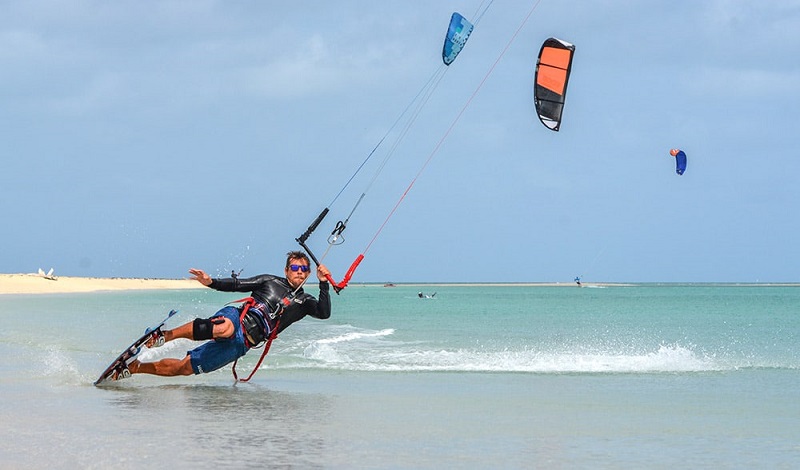
- Lean back slightly against the kite’s pull to maintain balance and control.
- Keep your hips and shoulders open towards your desired riding direction.
- Use your back foot to steer and your front foot to apply pressure and edge the board.
- Board Edging:
- Edge the board into the wind by applying pressure on your heels (heel-side riding).
- The angle of your edge will determine your direction and speed.
- Experiment with different edge angles to find the sweet spot for riding upwind efficiently.
- Speed and Power:
- Maintain a moderate speed while riding upwind.
- Use the kite’s power to generate lift and reduce drag.
- If you feel overpowered, ease the bar pressure or edge harder. If you lose power, sheet the bar in to generate more pull.
- Tacking (Zigzagging):
- Since you can’t ride directly upwind, you’ll need to tack.
- This involves riding at an angle upwind, then switching directions by turning through the wind.
- Practice tacking in both directions to improve your overall upwind ability.
Mastering Downwind Kitesurfing
Downwind riding is generally easier than upwind, but it’s still important to maintain control and avoid excessive speed.
- Kite Positioning:
- Position the kite higher in the wind window to reduce power.
- Focus on keeping the kite stable to avoid accidental power surges.
- Body Position and Steering:
- Lean slightly forward to maintain balance as you gain speed.
- Steer the board gently to maintain your course.
- Speed Management:
- Control your speed by edging the board or adjusting the kite’s position.
- Avoid excessive speed, which can lead to loss of control.
- Safety First:
- Always be aware of your surroundings, especially other water users.
- Wear a helmet and impact vest for protection.
- Ride within your skill level and avoid dangerous conditions.
Additional Tips for Beginners
- Take lessons: Professional instruction is invaluable for learning proper techniques and safety procedures.
- Start in light wind: Practice in low-wind conditions to build your skills without being overpowered.
- Choose the right gear: Use a kite size appropriate for your weight and the wind conditions.
- Be patient: Kitesurfing takes time and practice to master. Don’t get discouraged by setbacks.
- Have fun! Enjoy the thrill of riding the wind and waves.
Advanced Upwind Techniques (For Those with Existing Knowledge)
- Carving Turns: Smoothly transitioning between heel-side and toe-side turns will allow you to maintain speed and efficiently ride upwind.
- Jumping: Generating lift during upwind jumps can help you gain ground towards the wind.
- Riding Waves: Utilizing the energy of waves can give you an extra boost upwind.
Additional Resources:
- YouTube Tutorials: Numerous instructional videos are available online to visually demonstrate upwind and downwind techniques.
- Kitesurfing Forums: Engage with experienced riders and ask questions in online communities.
- Kitesurfing Magazines: Read articles and reviews to stay up-to-date on the latest gear and techniques.
By following this comprehensive guide and practicing consistently, you’ll be well on your way to mastering the art of kitesurfing upwind and downwind. Remember, safety should always be a priority, and don’t hesitate to seek guidance from experienced kitesurfers or instructors. Enjoy the exhilarating ride!