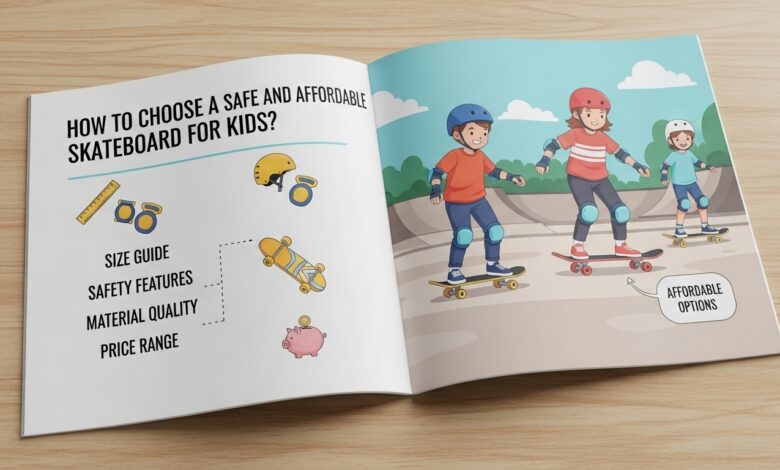
To choose a safe and affordable skateboard for kids, focus on the correct deck size, stable trucks, soft wheels, quality bearings, and safety gear. A properly sized youth skateboard setup reduces injury risk and improves balance for beginners.
Buying a skateboard for your child sounds simple. Until you realize how many options exist. Plastic boards. Mini cruisers. Full-size decks. Cheap supermarket models. Premium completes. The wrong choice can lead to frustration, falls, or wasted money.
Here’s the problem. Many starter boards for kids are built to hit a price point. Not to support skill development. According to emergency department data published by the U.S. Consumer Product Safety Commission, thousands of skateboard-related injuries occur each year among children under 14. Most injuries involve beginners. Many involve loss of balance due to unstable equipment.
The solution? A safe skateboard for children must be size-appropriate, stable, and built with quality components — even at an affordable price.
This guide will show you exactly how to choose the right youth skateboard setup without overspending. No fluff. Just clear answers.

What Makes a Skateboard Safe for Children?
Short Answer: A safe skateboard for children has a properly sized deck, stable trucks, soft wheels (78A–90A), reliable bearings, grip tape with traction, and mandatory protective gear.
1. Deck Size and Width
The deck is the foundation. For kids aged 5–10, a width between 7.0” and 7.5” works well. For older kids (9–12), 7.5” to 7.75” provides more stability.
A deck that is too wide feels heavy. Too narrow feels unstable.
- Under 6 years: 6.5”–7.0” deck width
- 6–8 years: 7.0”–7.3”
- 9–12 years: 7.3”–7.75”
Proper sizing improves foot placement and balance. That directly lowers fall risk.
2. Trucks (Metal Axles Under the Board)
Trucks control turning and stability. Cheap trucks bend easily and cause wobbling.
For a youth skateboard setup, aluminum trucks with medium bushings are ideal. They allow controlled turns without being too loose.
3. Wheel Hardness and Size
Wheel durometer affects ride smoothness.
- 78A–87A: Softer wheels. Better for rough pavement.
- 88A–95A: Good balance for beginners.
- 99A+: Not ideal for first-time riders.
Softer wheels absorb shock. That means fewer sudden stops and fewer falls.
4. Bearings
Look for ABEC-5 or ABEC-7 bearings. They provide smooth rolling without excessive speed.
Speed is not the goal for beginners. Control is.
5. Grip Tape
Grip tape should feel firm but not overly abrasive. Proper traction keeps shoes from slipping.
6. Safety Gear
No board is complete without:
- Helmet (CPSC-certified)
- Knee pads
- Elbow pads
- Wrist guards
Case studies from pediatric injury reviews show helmets significantly reduce head trauma severity. Never skip this step.
What Is the Best Starter Board for Kids?
Short Answer: The best starter board for kids is a complete skateboard from a reputable brand with quality components, not a toy-store plastic board.
Parents often choose the cheapest option available. That creates the problem.
Low-cost plastic boards:
- Have weak trucks
- Use hard wheels
- Offer poor grip
- Limit skill progression
A proper starter board for kids should be a complete skateboard designed for beginners. These boards are pre-assembled and tested for balance.
They cost more than toy models. But they last longer and improve safety.
How Much Should You Spend on a Youth Skateboard Setup?
Short Answer: Expect to spend $60–$120 for a safe skateboard for children with reliable components.
Here’s a general breakdown:
| Price Range | What You Get | Recommended? |
|---|---|---|
| $20–$40 | Toy-grade, plastic or low-quality parts | No |
| $60–$90 | Entry-level complete skateboard | Yes |
| $90–$120 | High-quality beginner setup | Strong Yes |
Spending slightly more upfront prevents replacement costs later.
Should Beginners Choose a Complete Skateboard or Build One?
Short Answer: Beginners should buy a complete skateboard. Custom builds are better for experienced riders.
A complete board ensures compatibility between:
- Deck width
- Truck size
- Wheel size
- Bearings
Custom builds require technical knowledge. A child learning to balance does not need complexity.
What Size Skateboard Is Best by Age and Height?
Short Answer: Match deck width to shoe size and height rather than age alone.
| Height | Shoe Size | Deck Width |
|---|---|---|
| Under 4’5” | 3–6 | 6.5”–7.0” |
| 4’5”–5’2” | 6–8 | 7.0”–7.5” |
| 5’2”+ | 8+ | 7.5”–7.75” |
Correct sizing improves control during push-off and turns.
What Type of Skateboard Is Safest for Young Riders?
Short Answer: A standard popsicle-shaped skateboard with soft wheels is the safest option for beginners.
Avoid:
- Penny boards for first-timers
- Longboards (too large for small children)
- High-performance trick decks
A traditional shape provides balanced foot placement and better learning mechanics.
How Can Parents Reduce Injury Risk?
Short Answer: Supervision, protective gear, smooth surfaces, and gradual skill progression reduce injuries.
Follow this progression plan:
- Practice standing on grass.
- Move to smooth concrete.
- Learn pushing and stopping.
- Practice turning.
- Avoid skate parks initially.
Structured learning reduces panic falls.
Are Affordable Skateboards Durable?
Short Answer: Yes, if they use 7-ply maple decks, aluminum trucks, and urethane wheels.
Durability checklist:
- 7-ply maple construction
- Metal trucks
- Urethane wheels
- Replaceable bearings
These features ensure the board lasts at least 1–2 years under beginner use.
What Common Mistakes Do Parents Make?
Short Answer: Buying oversized boards, ignoring wheel hardness, skipping safety gear, and prioritizing graphics over build quality.
Graphics do not improve stability. Components do.
Focus on function first.
Conclusion: How Do You Make the Smart Choice?
Choosing a safe skateboard for children is not about buying the cheapest option. It is about balancing affordability with stability, correct sizing, and protective equipment.
A properly selected youth skateboard setup improves confidence. It reduces injuries. It keeps your child engaged longer.
If you want reliable beginner recommendations tested for safety and price balance, explore this guide to the best affordable beginner skateboards and make an informed decision today.
Ready to choose the right starter board for kids? Start with trusted beginner models and invest in safety gear from day one. Your child’s confidence depends on it.
Frequently Asked Questions (FAQs)
1. What age can a child start skateboarding?
Children as young as 5 can start with supervision and safety gear. Focus on balance skills first.
2. Is a helmet necessary for beginner skateboarders?
Yes. Helmets significantly reduce the severity of head injuries in falls.
3. How long does a beginner skateboard last?
A quality complete board lasts 1–3 years depending on usage and maintenance.
4. Are cheap skateboards dangerous?
Low-quality boards with plastic trucks and hard wheels increase instability and fall risk.
5. Should kids use skateboards or scooters first?
Skateboards build balance differently. Either can work, but skateboards require more coordination.
6. What wheels are best for rough sidewalks?
Soft wheels between 78A and 87A absorb shock and provide smoother rides.
7. Can beginners learn tricks immediately?
No. Focus on balance, pushing, and turning before attempting tricks.
Related Topic: How to Pick the Right Skate Shoes for Beginners in 2026
Read Next: What Are the Best Skateboard Wheels for Cruising? A Beginner’s Guide