What Is the Best Beginner Surf Gear for Easier Wave Control?
The best beginner surf gear for easier wave control includes a stable soft-top surfboard, larger stable fins, a reliable leash, proper wax, and a comfortable wetsuit. These items improve balance, paddling efficiency, and turning control while reducing wipeouts.
Many beginner surfers struggle because they buy advanced equipment too early. Small boards, loose fin setups, and unstable gear make even small waves feel difficult. The result is frustration, slow progression, and poor wave control.
Good beginner surf gear solves that problem. Stable fins improve tracking. Soft-top boards increase forgiveness. Proper traction helps maintain footing during pop-ups and turns. Together, these elements make easy control surfing far more achievable.
According to the Surf Industry Members Association, beginner-friendly soft-top surfboards remain one of the fastest-growing categories because they help new surfers learn faster and stay safer. Surf schools worldwide also prioritize large-volume boards and stable fin systems for first-time riders.
If your goal is smoother rides, better balance, and easier turns, the right beginner setup matters more than raw athletic ability.
Why Does Beginner Surf Gear Matter So Much for Wave Control?
Beginner surf gear matters because it directly affects stability, paddling speed, balance, and turning response. The wrong setup makes wave control harder even in small surf.
New surfers often assume skill alone controls performance. In reality, equipment heavily influences early progress. A board with enough volume keeps you floating higher in the water. Larger fins create grip and directional stability. Softer rails reduce harsh reactions during turns.
Easy control surfing depends on predictability. Beginners need forgiving equipment that responds smoothly instead of aggressively.
- Stable gear improves confidence
- Larger boards catch waves earlier
- Stable fins reduce side slipping
- Soft-top boards lower injury risk
- Balanced setups improve pop-up timing
Professional surf instructors commonly recommend boards between 7 and 9 feet for first-time surfers because they provide enough buoyancy for consistent practice.
What Type of Surfboard Is Best for Beginners?
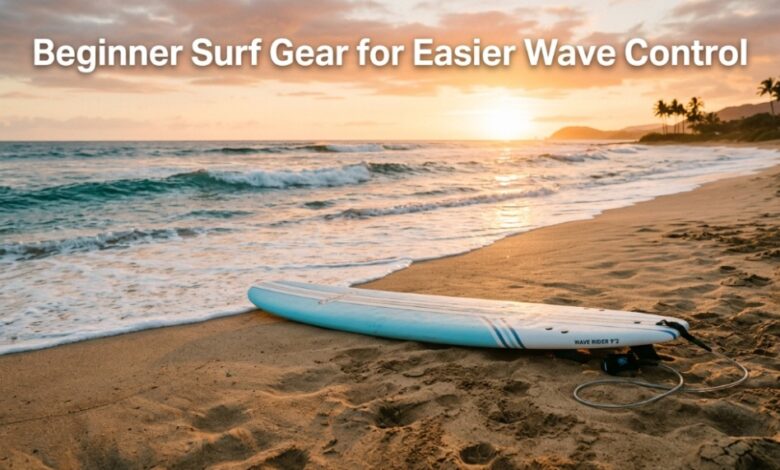
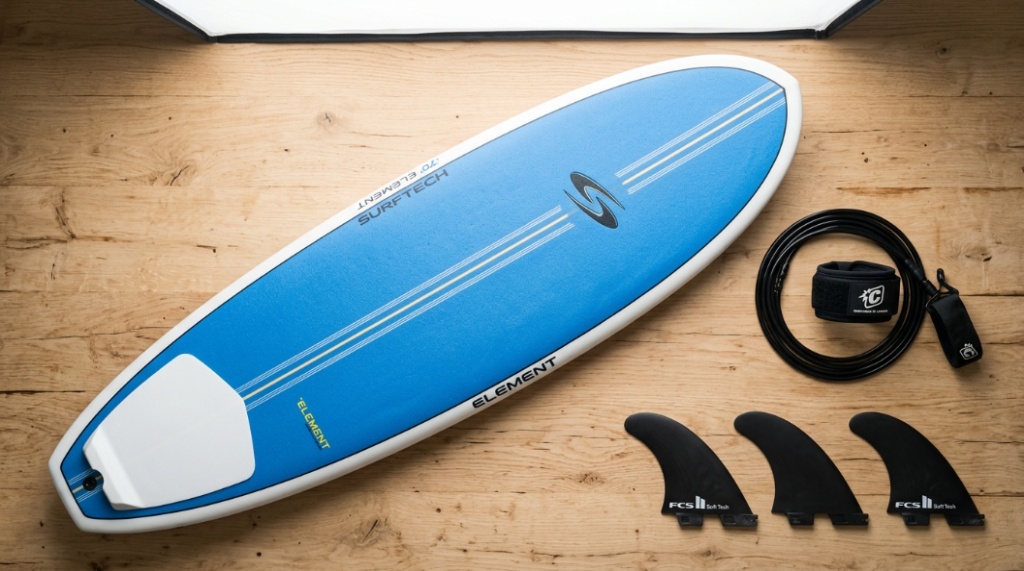
The best beginner surfboard is usually a soft-top longboard or foam board between 7 and 9 feet long with high volume and rounded rails.
A beginner board should prioritize stability over maneuverability. Many new surfers make the mistake of choosing shortboards because they look advanced and stylish. Unfortunately, small boards require faster pop-ups, stronger paddling, and more precise balance.
Soft-top surfboards are ideal because they are forgiving and easier to control. Their extra foam volume keeps riders stable while paddling and standing.
Why Are Soft-Top Boards Better for Easy Control Surfing?
Soft-top boards provide more flotation, safer wipeouts, and smoother balance correction. They allow beginners to focus on wave timing instead of fighting instability.
Foam surfboards also help reduce fear. Beginners tend to commit more confidently during takeoffs when using softer equipment.
Recommended Beginner Board Features
| Feature | Why It Helps Beginners |
|---|---|
| High Volume | Improves stability and paddling |
| Rounded Nose | Prevents nose diving |
| Soft Deck | Safer during falls |
| Long Length | Easier wave catching |
| Wide Shape | Better balance and control |
What Are Stable Fins and Why Do Beginners Need Them?
Stable fins are larger, more predictable fin setups designed to improve tracking, hold, and balance during turns. Beginners need them because they reduce wobbling and make boards easier to control.
Surfboard fins act like the steering and stabilizing system of a surfboard. Without the right fin setup, beginners may struggle to maintain direction or control speed on the wave face.
Stable fins help by:
- Increasing hold during turns
- Reducing sliding on small waves
- Improving straight-line tracking
- Creating smoother carving response
- Helping maintain balance during takeoff
What Fin Setup Is Best for Beginner Surfers?
A thruster setup with medium-to-large stable fins is usually best for beginner surfers because it balances stability and turning control.
The classic thruster setup uses three fins. This arrangement offers predictable handling in small-to-medium surf conditions.
Beginner Fin Setup Comparison
| Fin Setup | Best For | Difficulty Level |
|---|---|---|
| Single Fin | Smooth cruising | Easy |
| Thruster | Balanced control | Beginner-Friendly |
| Quad | Speed generation | Intermediate |
| Twin Fin | Loose turns | Harder for beginners |
How Do Larger Fins Improve Easy Control Surfing?
Larger fins improve easy control surfing by creating more drag, better grip, and increased directional stability.
Small fins feel loose and responsive, which advanced surfers may prefer. Beginners, however, benefit from more resistance and smoother transitions.
Stable fins help control:
- Wave direction
- Rail engagement
- Turning consistency
- Board drift
- Speed management
Think of larger fins like training wheels for wave riding. They create a more forgiving feel while learning balance and timing.
Do Beginner Surfers Need a Wetsuit?
Beginner surfers need a wetsuit in colder water because it improves comfort, endurance, and muscle performance.
Cold water drains energy quickly. When beginners become cold, they fatigue faster and lose paddling strength. This directly affects balance and reaction time.
A properly fitted wetsuit helps maintain body temperature and allows longer surf sessions.
What Wetsuit Thickness Should Beginners Use?
| Water Temperature | Recommended Wetsuit |
|---|---|
| 75°F+ (24°C+) | Rash Guard or Springsuit |
| 65–74°F (18–23°C) | 2mm Full Suit |
| 58–64°F (14–17°C) | 3/2mm Wetsuit |
| 50–57°F (10–13°C) | 4/3mm Wetsuit |
Why Is Surf Wax Important for Wave Control?
Surf wax improves grip and prevents slipping during pop-ups, turns, and weight shifts.
Many beginners underestimate how important traction is. Without proper wax, feet slide across the deck during takeoff, making balance extremely difficult.
Different water temperatures require different wax formulas:
- Cold water wax
- Cool water wax
- Warm water wax
- Tropical wax
Applying wax correctly also matters. Most surfers use circular motions to create textured bumps for maximum traction.
What Accessories Help Beginners Control Waves More Easily?
The best beginner surf accessories include a leash, traction pad, rash guard, changing towel, and surf backpack.
These accessories improve comfort, safety, and overall learning efficiency.
Must-Have Beginner Surf Accessories
- Leash: Prevents losing your board after wipeouts
- Rash Guard: Reduces skin irritation
- Traction Pad: Improves rear-foot grip
- Changing Poncho: Makes beach changing easier
- Board Bag: Protects equipment during transport
A quality leash is especially important. Surfboards become dangerous projectiles in waves if not secured properly.
How Can Beginners Choose the Right Surfboard Size?
Beginners should choose surfboards based on volume, weight, fitness level, and wave conditions rather than appearance alone.
Board volume determines flotation. More flotation means easier paddling and balance.
Simple Beginner Surfboard Size Guide
| Surfer Weight | Recommended Board Length |
|---|---|
| Under 140 lbs | 7’0”–8’0” |
| 140–180 lbs | 8’0”–8’6” |
| 180+ lbs | 8’6”–9’0” |
Fitness and athletic background also matter. Strong swimmers may adapt faster, but even athletic beginners benefit from stable equipment.
What Mistakes Do Beginners Make When Buying Surf Gear?
The biggest beginner mistake is choosing advanced gear too early. Smaller boards and loose fin setups make learning much harder.
Many surfers buy performance shortboards because professionals use them. But pro equipment is designed for experienced riders with refined technique.
Common Beginner Surf Gear Mistakes
- Buying a shortboard too early
- Using fins that are too small
- Ignoring board volume
- Skipping surf wax
- Choosing style over stability
- Buying cheap low-quality leashes
Surf schools consistently use high-volume foam boards because they improve wave-catching success rates dramatically.
Can Beginners Learn Faster With Stable Surf Gear?
Yes. Stable surf gear accelerates learning by reducing unnecessary instability and allowing surfers to focus on technique.
Learning to surf involves mastering several skills simultaneously:
- Paddling
- Wave timing
- Balance
- Pop-up mechanics
- Turning
- Ocean awareness
If equipment constantly fights the rider, progress slows significantly.
Stable fins and beginner-friendly boards simplify the learning process. This creates more successful rides per session, which improves confidence and muscle memory.
What Wave Conditions Are Best for Beginner Surfing?
The best wave conditions for beginners are small, slow, rolling waves with soft breaking sections.
Wave choice matters just as much as equipment choice. Large, fast waves create panic and instability for new surfers.
Ideal Beginner Surf Conditions
- Wave height between 1–3 feet
- Sandy bottom beaches
- Gentle whitewater waves
- Low wind conditions
- Consistent swell patterns
Many surf schools prefer beach breaks because they are generally safer than reef or point breaks.
How Long Does It Take Beginners to Control Waves Confidently?
Most beginners develop basic wave control within 10–20 surf sessions using stable beginner surf gear.
Progress depends on consistency, ocean conditions, fitness, and equipment quality.
Surfers using stable fins and large-volume boards usually improve faster because they spend more time standing and riding instead of struggling to paddle or balance.
Consistency matters most. Two sessions per week generally produce much faster progress than occasional surfing.
Should Beginners Upgrade Their Surf Gear Quickly?
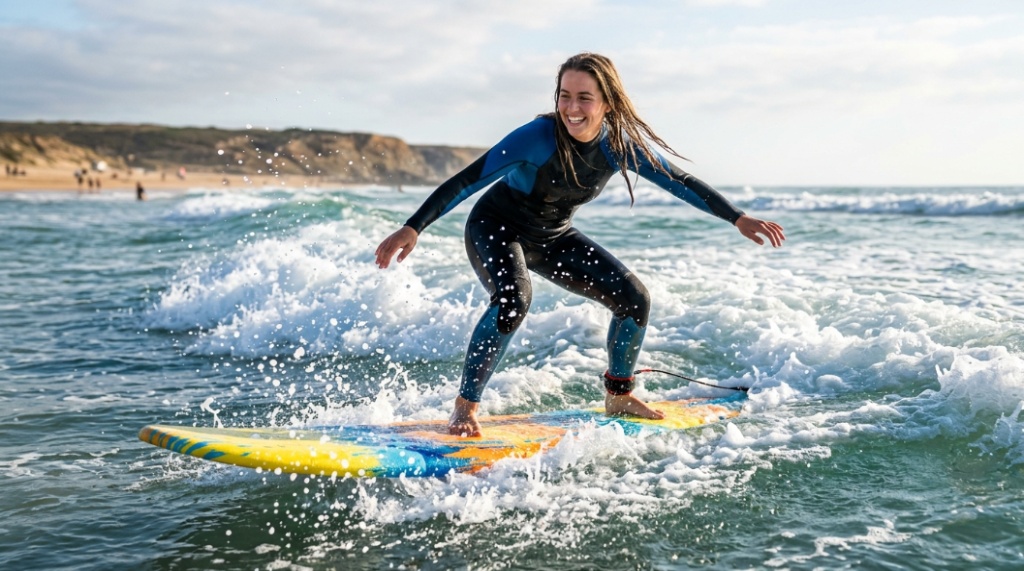
No. Beginners should stay with stable gear until they consistently catch waves, angle takeoffs, and perform controlled turns.
Upgrading too early often causes regression. Smaller performance boards demand faster reflexes and precise positioning.
A good rule:
- Master consistency first
- Improve turning second
- Reduce board size gradually
Many surfers continue using longboards for years because they provide smooth wave-catching and enjoyable rides in varied conditions.
Conclusion: What Beginner Surf Gear Creates the Easiest Wave Control?
The easiest path to wave control starts with stable, forgiving surf gear. A high-volume soft-top surfboard paired with stable fins creates the foundation beginners need for smoother paddling, easier balance, and more predictable turns.
Easy control surfing is not about buying advanced equipment. It is about choosing gear that matches your current skill level. Larger boards improve flotation. Stable fins improve tracking. Proper wax and accessories improve confidence and safety.
Beginners who focus on stability usually progress faster because they spend more time riding waves successfully instead of fighting their equipment.
If you want to improve quickly, prioritize control over performance styling. Start with reliable beginner surf gear, practice consistently in smaller waves, and gradually refine your setup as your skills improve.
The right equipment can turn frustrating early surf sessions into enjoyable progress-filled experiences. Choose gear designed for learning, and wave control becomes dramatically easier.
FAQ: Beginner Surf Gear for Easier Wave Control
What is the best beginner surfboard for easy control surfing?
The best beginner surfboard is typically a soft-top longboard between 7 and 9 feet long with high volume and rounded rails. It improves stability, paddling, and wave-catching ability.
Are stable fins better for beginner surfers?
Yes. Stable fins provide more grip, smoother turns, and better tracking. They help beginners maintain balance and control while learning wave positioning and turning.
Can beginners use shortboards?
Beginners can use shortboards, but learning is usually much harder. Shortboards require faster paddling, quicker pop-ups, and stronger balance skills.
How important is surf wax for beginners?
Surf wax is essential because it creates traction on the board deck. Without proper grip, beginners often slip during takeoffs and turns.
What size waves should beginners surf?
Beginners should start in waves between 1 and 3 feet high with soft, slow-breaking sections. Smaller waves improve safety and learning consistency.
How long does it take to learn wave control?
Most beginners develop basic wave control within 10–20 consistent surf sessions when using stable beginner surf gear and practicing regularly.
Do larger fins slow down surfing?
Yes, slightly. Larger fins create more drag, but they also improve stability and control. For beginners, this tradeoff usually improves learning speed.