

Getting your child started in golf is an exciting journey. However, choosing the right equipment can feel overwhelming with so many options available. Selecting appropriate clubs makes a significant difference in whether your young golfer develops a love for the game or becomes frustrated and loses interest.
This comprehensive guide will walk you through everything you need to know about purchasing clubs for young beginners. You’ll learn what to look for, what to avoid, and how to make smart choices that grow with your child. Whether your little one is just starting out or showing serious interest in the sport, this information will help you make an informed decision.
Understanding Why Kids Need Specific Equipment
Adult clubs are designed for adult bodies, strength, and swing speeds. Children have different proportions, less strength, and shorter arms. Therefore, using equipment sized for their bodies is essential for proper development and enjoyment of the game.
When kids use clubs that are too long, too heavy, or have incorrect flex, they develop bad habits. These poor mechanics become ingrained and are difficult to correct later. Additionally, struggling with inappropriate equipment quickly leads to frustration and discouragement.
Properly fitted clubs allow children to learn correct swing fundamentals from the beginning. They can make solid contact with the ball more easily, which builds confidence and keeps the game fun. This positive early experience often determines whether a child continues playing golf long-term.
Determining the Right Size for Your Child
Club length is the most critical factor when selecting equipment for young players. The right length allows a child to address the ball comfortably without hunching over or standing too upright.
Height serves as the primary measurement guide. Most manufacturers provide height-based charts showing which club lengths suit different age groups. However, remember that children of the same age can vary significantly in height. Always prioritize height over age when making your selection.
Have your child stand naturally with their arms hanging at their sides. Measure from the ground to their wrists. This measurement, combined with their overall height, helps determine the appropriate club length. Many specialty golf shops offer fitting services specifically for junior players.
Keep in mind that children grow quickly. You might need to replace clubs every couple of years as your child gets taller. Therefore, buying extremely expensive sets for rapidly growing children often doesn’t make financial sense.
Choosing Between Complete Sets and Individual Clubs
For beginners, especially golf clubs for 5-8 year olds, complete sets usually make the most sense. These packages include everything a young player needs to start learning the game without requiring additional purchases.
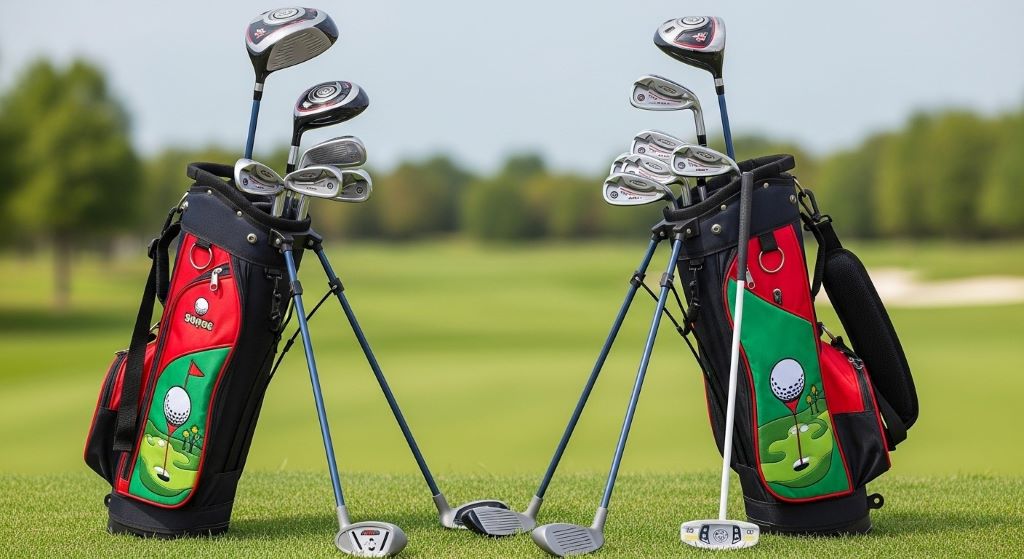
A typical starter set includes a driver, a fairway wood or hybrid, a few irons, a wedge, and a putter. Some sets also come with a lightweight bag designed for small shoulders. This variety gives young players the tools they need for different situations on the course.
Individual clubs make more sense for children who have been playing for a while and have specific needs. As kids advance, they might benefit from adding specialty clubs or upgrading particular clubs in their bag. However, this approach requires more knowledge and comes at a higher overall cost.
Complete sets offer better value for beginners. They ensure your child has appropriate clubs for various shots without the complexity of choosing individual pieces. Additionally, sets from reputable manufacturers maintain consistent quality across all clubs.
Material and Weight Considerations
Weight significantly impacts a young golfer’s ability to swing properly. Clubs that are too heavy cause fatigue, slow swing speeds, and poor mechanics. Children should be able to swing their clubs smoothly without straining.
Most junior clubs feature lightweight graphite shafts rather than steel. Graphite provides the necessary flexibility and reduced weight that young players need. The lighter weight allows children to generate adequate swing speed and maintain control throughout their swing.
Club heads should also be proportionally lighter than adult versions. Oversized heads might seem appealing because they offer a larger sweet spot, but they can be too heavy for small children to control effectively. Look for age-appropriate head sizes that balance forgiveness with manageable weight.
The grip size matters more than many parents realize. Grips that are too thick prevent children from properly releasing the club through impact. Junior-specific grips are narrower, allowing small hands to hold the club correctly and develop proper hand action.
Understanding Shaft Flex and Its Importance
Shaft flex refers to how much the shaft bends during the swing. The correct flex helps generate optimal distance and accuracy. Junior clubs typically feature more flexible shafts than adult clubs because children have slower swing speeds.
A shaft that’s too stiff won’t bend properly during a child’s swing, resulting in lower ball flight and reduced distance. Conversely, a shaft that’s too flexible can cause inconsistent contact and directional problems. Most junior golf equipment guide resources emphasize matching shaft flex to the child’s swing speed and strength.
For young beginners, extra-flexible shafts work well. As children grow stronger and develop faster swing speeds, they may need slightly stiffer shafts. However, this becomes more relevant as they approach their teenage years.
Don’t worry too much about shaft flex for very young beginners. The primary concerns at this stage are length and weight. As long as you choose reputable junior-specific clubs, the flex will be appropriate for your child’s age group.
Deciding on Brand and Quality Level
The golf equipment market offers options ranging from budget-friendly to premium. Finding the right balance between quality and cost depends on your child’s commitment level and your budget.
Top golf manufacturers like Callaway, TaylorMade, Ping, and Titleist all produce junior lines. These brands offer excellent quality, advanced technology, and good resale value. However, they come with higher price tags that might not make sense for a child just trying golf for the first time.
Mid-range brands provide solid quality at more accessible prices. Companies specializing in junior golf equipment often deliver better value than entry-level offerings from premium brands. These clubs perform well for beginners and casual young players.
Budget options work fine for very young children or those just exploring whether they enjoy golf. However, extremely cheap clubs may be poorly balanced or use inferior materials. Read reviews and avoid the absolute cheapest options, as these can hinder development and break easily.
Essential Clubs for Young Beginners
Young children don’t need a full 14-club set that adults carry. Starting with fewer clubs simplifies the learning process and makes the game less overwhelming. A basic set typically includes five to seven clubs.
The driver helps children learn to hit tee shots on longer holes. Modern junior drivers feature large, forgiving faces that help kids make solid contact. However, some instructors suggest young beginners start with a fairway wood before adding a driver.
A fairway wood or hybrid serves multiple purposes. These clubs work from the tee, fairway, and even light rough. Hybrids are generally easier to hit than traditional fairway woods, making them popular choices for junior sets.
Mid-irons, typically a 7-iron and 9-iron, provide versatility for approach shots. These clubs are easier to control than long irons and offer enough loft for young players to get the ball airborne. As children progress, they can add more irons to fill gaps.
A wedge, usually a pitching wedge or sand wedge, helps with short shots around the green and bunker play. These clubs teach children finesse and control rather than just distance.
The putter might be the most important club in the bag. Children use it on every hole, often multiple times. A well-balanced putter suited to their height helps develop good putting fundamentals early.
What to Look for in a Junior Golf Bag
The bag matters more than you might think. A poorly designed bag can make carrying clubs uncomfortable and discourage children from wanting to play.
Weight is the primary consideration. Even empty, the bag should be light enough for your child to carry comfortably. Many junior bags use lightweight materials like nylon rather than heavier leather or synthetic alternatives.
Stand bags with dual straps distribute weight across both shoulders more comfortably than single-strap carry bags. The stand mechanism should be easy for children to operate independently. Some bags designed for younger kids feature three or four dividers rather than full individual dividers for each club.
Size matters too. A bag that’s too large becomes cumbersome and difficult to manage. Junior-specific bags have appropriately sized pockets for smaller hands and bodies. However, ensure the bag can accommodate all the clubs in your child’s set.
Look for bags with comfortable, padded straps. The strap adjustments should be easy for children to modify as they grow. A grab handle on top makes lifting and moving the bag easier for parents and kids.
Additional Accessories Worth Considering
Beyond clubs and a bag, several accessories enhance the junior golf experience and protect your investment.
Golf gloves help young players maintain a secure grip, especially in hot or humid conditions. Junior gloves come in smaller sizes with proper proportions. Your child might only need one glove for their lead hand, though some players prefer wearing gloves on both hands.
Headcovers protect club heads from damage during transport and storage. Drivers and fairway woods particularly benefit from covers. Many junior sets include matching headcovers, but if yours doesn’t, they’re an inexpensive addition.
Golf balls designed for junors use softer compression and brighter colors. The softer construction helps young players with slower swing speeds achieve better distance. Bright colors make balls easier to find, reducing frustration and speeding up play.
Tees are essential, obviously, but consider getting longer tees for drivers and shorter ones for irons and fairway woods. Teaching children to use appropriate tee heights for different clubs builds good habits.
A towel for cleaning clubs and balls is useful. Kids can clip a small towel to their bag and learn proper equipment maintenance. This simple habit extends the life of their clubs and teaches responsibility.
Where to Buy Junior Golf Equipment
Several purchasing options exist, each with advantages and disadvantages. Understanding these helps you make the best choice for your situation.
Specialty golf retailers offer expert advice and fitting services. Staff members can assess your child’s needs and recommend appropriate options. You can see and feel the clubs before purchasing, and your child can even take practice swings. However, prices at these stores are typically higher than online options.
Major sporting goods stores carry junior golf equipment at various price points. While the selection might be smaller than specialty shops, the prices are often more competitive. Staff knowledge varies significantly by location.
Online retailers provide the widest selection and often the best prices. Customer reviews offer valuable insights from other parents. However, you can’t physically examine the clubs, and returns can be complicated if the clubs don’t fit properly.
Used equipment markets offer significant savings. Websites, apps, and local shops sell pre-owned junior clubs at substantial discounts. Since children outgrow clubs quickly, used sets are often in excellent condition. This option makes particular sense for very young children or those just exploring the game.
Golf courses sometimes have demo programs or rental sets. Trying clubs before buying helps ensure you make the right choice. Some courses also host trade-in events where families can exchange outgrown equipment.
When to Upgrade or Replace Equipment
Knowing when to move up to new clubs saves money and ensures your child always has appropriate equipment.
Height remains the key indicator. If your child has grown two or three inches since getting their current clubs, it’s probably time to upgrade. You’ll notice them bending over more at address or standing awkwardly to accommodate clubs that are now too short.
Skill development also signals when upgrades make sense. If your child has progressed beyond beginner level and plays regularly, investing in better quality clubs can help them continue improving. Advanced beginners might benefit from adding clubs to their set or upgrading to better technology.
Club condition matters too. Clubs that show significant wear, have damaged grips, or have bent shafts should be replaced regardless of whether your child has outgrown them. Damaged clubs can hinder performance and potentially cause injury.
However, avoid the temptation to constantly upgrade. Unless your child is a serious junior competitor, replacing clubs every season isn’t necessary. Most junior clubs work well for two to three years before needing replacement.
Teaching Your Child Proper Club Care
Maintaining golf equipment teaches children responsibility while protecting your investment. These habits are easy to establish and benefit young golfers throughout their lives.
Clean clubs after each round. A simple wipe-down removes dirt, grass, and moisture that can damage clubs over time. Show your child how to clean grooves with a brush and dry everything thoroughly.
Store clubs properly indoors when possible. Extreme temperatures in garages or car trunks can damage grips and loosen club heads. A cool, dry location preserves equipment longer.
Check grips regularly for wear. Worn grips become slippery and reduce control. Replacing grips is inexpensive and makes clubs feel like new again. Children can help with this process, learning basic equipment maintenance.
Inspect clubs for damage before each use. Look for loose heads, bent shafts, or other issues. Addressing small problems immediately prevents them from becoming bigger issues that require replacement.
Making Golf Affordable and Accessible
Golf can be expensive, but it doesn’t have to break the bank. Smart strategies make the sport accessible for families on various budgets.
Start with basic equipment and add pieces as your child’s interest grows. Beginning with a half-set rather than full set saves money while providing everything needed to learn.
Take advantage of trade-in programs and hand-me-downs. Many families pass equipment between siblings or friends. Golf communities often have swap groups where families exchange outgrown equipment.
Look for sales during off-season months. Late fall and winter typically offer the best deals on golf equipment. Last year’s models provide excellent value once new versions release.
Consider group lessons or clinics rather than private instruction initially. Many courses and golf academies offer affordable junior programs that include instruction and sometimes equipment use.
Many municipal and public courses offer junior memberships at reduced rates. Some courses even provide free or discounted play for juniors with a paying adult.
Building Confidence and Enjoyment
Remember that the ultimate goal is fostering a love for golf. Equipment plays a role, but it’s just one factor in your child’s enjoyment and development.
Celebrate small victories and progress. Golf is challenging even for adults, so patience and encouragement help children stick with it through the learning curve.
Make practice fun rather than drill-focused. Games and challenges keep young players engaged while building skills. Let them hit different types of shots and experiment with their clubs.
Play shortened courses or formats. Nine holes or even six holes might be plenty for young children. Starting on par-3 courses or executive courses provides a complete golf experience without the marathon length of regulation courses.
Focus on fundamentals rather than scores. Teaching proper grip, stance, and swing mechanics matters more than how many strokes it takes to finish a hole. Scores improve naturally as skills develop.
Conclusion
Selecting the best junior golf club set requires balancing several factors including size, quality, budget, and your child’s commitment level. The most important considerations are proper length and weight, ensuring clubs match your child’s height and strength rather than their age.
For golf clubs for 5-8 year olds, complete starter sets from reputable manufacturers offer the best value and performance. These sets provide everything needed to begin learning while maintaining appropriate proportions for small bodies. As children grow and develop their skills, you can upgrade equipment accordingly.
Remember that this junior golf equipment guide emphasizes that no single “perfect” set exists for every child. Consider your child’s specific measurements, their interest level, and your budget when making decisions. Starting with properly fitted, quality equipment sets the foundation for a lifetime of enjoying golf.
Most importantly, keep the focus on fun and learning. The right equipment helps, but your encouragement and support matter far more than having the most expensive clubs. With appropriate equipment and a positive approach, you’re setting your child up for success and enjoyment in this wonderful sport.
Frequently Asked Questions
What size clubs should I buy for my 6-year-old who is 45 inches tall?
A child who is 45 inches tall typically needs clubs in the 42-inch to 47-inch height range, which usually corresponds to clubs between 24 and 27 inches in length for irons. Most manufacturers label these for ages 5-7, but always verify the height range on the packaging. Have your child try a few practice swings to ensure they can address the ball comfortably without bending over excessively or standing too upright.
How much should I expect to spend on a quality junior starter set?
Quality starter sets typically range from $150 to $400 depending on the brand and number of clubs included. Sets in the $200-$300 range usually offer the best balance of quality and value for beginners. However, excellent used sets can be found for $75-$150. Avoid extremely cheap sets under $100 new, as these often use poor materials that can hinder development and break easily.
Can my child use cut-down adult clubs instead of junior-specific clubs?
While cutting down adult clubs might seem economical, it’s not recommended. Cutting adult clubs creates improper weight distribution, incorrect swing weight, and potentially dangerous club balance. Junior-specific clubs are engineered with appropriate flex, weight, and head size for young players. The modest savings from cutting down adult clubs isn’t worth the potential negative impact on your child’s development and enjoyment.
How often will my child outgrow their golf clubs?
Most children outgrow their clubs every two to three years, depending on growth spurts. Very young children who experience rapid growth might need new clubs more frequently, while older juniors approaching their full height may use clubs for longer periods. Monitor your child’s posture at address and their overall comfort with the clubs. If they’re hunching over or struggling to make solid contact after previously hitting well, they’ve likely outgrown their current set.
Should I buy graphite or steel shafts for my junior golfer?
Graphite shafts are almost always the better choice for junior golfers. They’re lighter, more flexible, and help young players generate adequate swing speed with less effort. Steel shafts are too heavy for most children and can lead to poor mechanics and fatigue. The only exception might be for advanced teenage players who have developed significant strength and faster swing speeds, but even then, lightweight graphite often works better.
Related Topics:
Top 10 Tactical Backpacks for Everyday Carry in 2025