How to Improve Balance and Control in Windsurfing: The Ultimate Guide to Mastering the Waves


Windsurfing is a dance between wind and water, where every movement counts. Yet, most riders struggle with one fundamental skill: windsurfing balance. Without it, even the best equipment and strongest winds won’t help you harness the power of the sail or carve through the waves with confidence. The truth? Balance isn’t just about staying upright—it’s about control, efficiency, and unlocking the full potential of your ride.
I’ve spent over two decades windsurfing in conditions ranging from glassy lagoons to stormy ocean swells. I’ve seen beginners and seasoned riders alike hit plateaus because they overlook the nuances of balance and control. This guide isn’t about quick fixes or gimmicks. It’s about understanding the mechanics of windsurfing balance, training your body to respond intuitively, and developing the finesse to ride with precision in any condition.
You’ll learn how to position your body for maximum stability, adjust to changing winds and waves, and use your equipment to your advantage. By the end, you’ll have a toolkit of windsurfing tips to transform your rides from wobbly to effortless—whether you’re cruising, racing, or catching air.
The Science of Windsurfing Balance: Why It’s More Than Just Standing Up
The Physics of Balance on a Board
Windsurfing balance is a dynamic interplay between gravity, wind force, and water resistance. Your body acts as a counterweight to the sail, which acts like a giant lever trying to tip you over. The goal is to keep your center of gravity aligned with the board’s centerline while adjusting to the sail’s pull.
A study from the Journal of Sports Science found that elite windsurfers adjust their balance up to 20 times per minute—subtle shifts that keep them stable and in control. These adjustments aren’t random; they’re a response to wind gusts, wave motion, and sail pressure.
The Role of Core Strength and Proprioception
Balance in windsurfing isn’t just about your legs. It starts with your core. A strong core stabilizes your torso, allowing your arms and legs to make precise adjustments. Proprioception—your body’s ability to sense movement and position—is equally critical. It’s what lets you feel the board’s tilt and adjust without thinking.
Example: When a gust hits, your core engages to keep your upper body steady while your legs absorb the movement. Without core strength, you’ll overcompensate with your arms, leading to fatigue and loss of control.
The Wind-Sail-Board Triangle: How Forces Affect Your Balance
Three primary forces influence your balance:
- Wind Force: Acts on the sail, pulling you forward and sideways.
- Water Resistance: Pushes against the board, creating drag.
- Gravity: Pulls you downward, anchoring you to the board.
Mastering windsurfing balance means managing these forces in harmony. Too much sail power without enough board resistance? You’ll tip over. Too little wind engagement? You’ll stall.
The Footwork Factor: Why Your Feet Are Your Best Tool
Your feet are your direct connection to the board. Where you place them—and how you distribute your weight—determines your stability and control. Beginners often stand too rigidly, while advanced riders use dynamic footwork to steer, accelerate, and jump.
Pro tip: Think of your feet as rudders. Shifting your weight forward speeds you up; moving it back slows you down. Pressing your toes or heels steers the board.
How to Improve Balance and Control in Windsurfing: A Step-by-Step Guide
Step 1: Master the Basic Stance
Before you tackle advanced moves, nail the fundamentals:
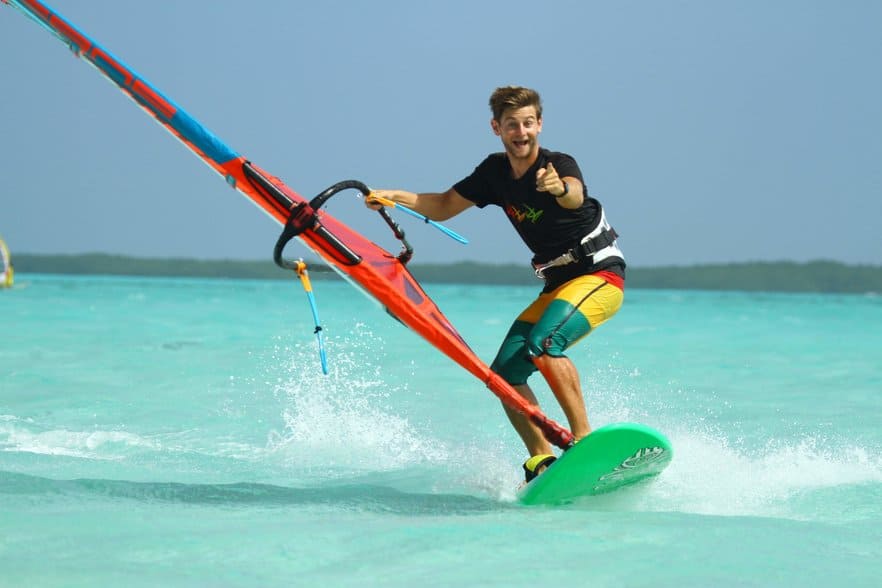
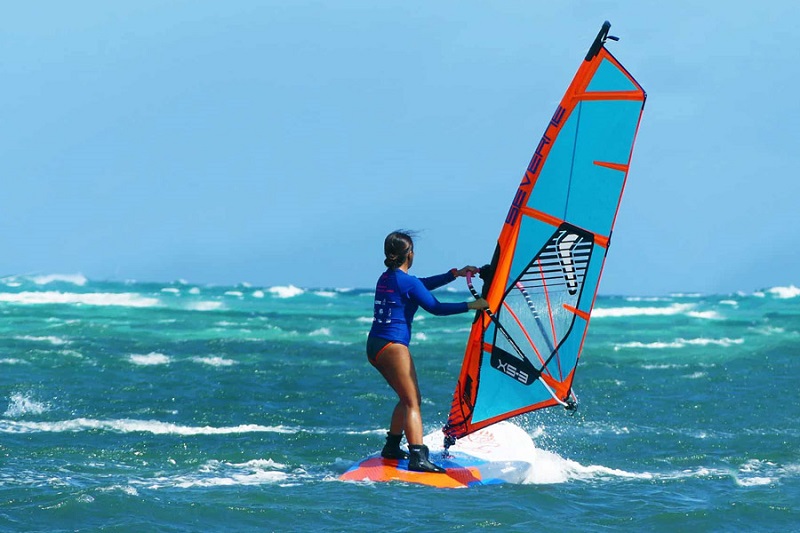
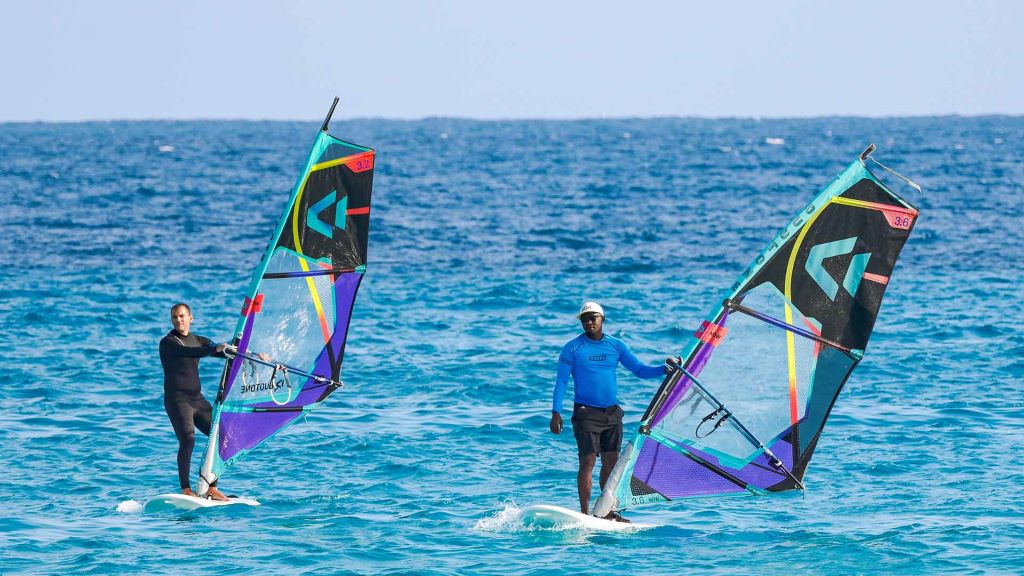
- Feet Position: Stand with your feet shoulder-width apart, centered over the board’s midline. Your front foot should point slightly forward; your back foot should be perpendicular to the board.
- Knees: Keep them slightly bent to absorb shocks and maintain flexibility.
- Hips: Push them forward to counterbalance the sail’s pull.
- Arms: Extend them to control the sail, but avoid locking your elbows. Think of your arms as ropes connecting you to the sail.
Example: Imagine you’re a tree. Your legs are the roots (stable but flexible), your core is the trunk (strong and centered), and your arms are the branches (adjusting to the wind).
Step 2: Train Your Core Off the Water
Balance starts on land. Incorporate these exercises into your routine:
- Planks: Build endurance in your core and shoulders.
- Single-Leg Balances: Stand on one leg for 30-60 seconds to improve proprioception.
- Bosu Ball or Wobble Board: Simulates the instability of a windsurfing board.
- Russian Twists: Strengthens obliques for rotational stability.
Pro tip: Add a windsurfing-specific twist to planks by holding a broomstick like a sail and practicing balance adjustments.
Step 3: Practice on Flat Water First
Calm conditions let you focus on technique without fighting waves or gusts. Use this time to:
- Experiment with foot placement.
- Practice shifting your weight forward and back.
- Adjust your sail angle to see how it affects your balance.
Example: Try sailing in a straight line with your eyes closed (briefly!) to heighten your sense of balance and board movement.
Step 4: Learn to Read the Wind and Water
Windsurfing balance isn’t static—it’s a constant response to your environment. Train yourself to notice:
- Wind Shifts: Gusts require quick weight adjustments to avoid tipping.
- Wave Patterns: Choppy water demands flexible knees and a lower center of gravity.
- Sail Pressure: A fully powered sail needs more counterbalance from your hips and legs.
Pro tip: Watch the water’s surface for wind ripples. Darker, smoother patches indicate lulls; whitecaps signal gusts.
Step 5: Use Your Sail as a Balance Tool
Your sail isn’t just for propulsion—it’s a stabilizer. Use it to:
- Counterbalance Gusts: When a gust hits, sheet out (let the sail out) slightly to reduce pull, then adjust your stance.
- Steer With Precision: Tilt the sail forward to turn upwind; lean it back to bear away.
- Recover From Tips: If you start to tip, push the sail away from the board to right yourself.
Example: In strong winds, bend your knees and lower your hips to create a stable base, using the sail’s pull to anchor you.
Step 6: Progress to Dynamic Moves
Once you’re comfortable with the basics, practice:
- Carving Turns: Shift your weight to the inside of the turn, using your back foot to steer.
- Jumping: Use your legs to spring off the board, keeping the sail sheeted in for control.
- Riding Waves: Adjust your stance to the wave’s shape, leaning back on the face and forward in the trough.
Step 7: Train With a Buddy or Coach
Feedback is invaluable. Have someone watch your stance and sail control from the shore or another board. Record video of your sessions to analyze your technique.
Pro tip: Focus on one skill at a time (e.g., footwork, sail control) to avoid overwhelm.
Windsurfing Tips: Advanced Techniques for Better Control
Tip 1: Fine-Tune Your Footwork for Speed and Maneuverability
Your feet are your steering wheel and gas pedal. Experiment with:
- Front Foot Pressure: More pressure = more speed and upwind angle.
- Back Foot Pressure: More pressure = better control and downwind turns.
- Toe/Heel Adjustments: Pressing your toes turns the board downwind; heels turn it upwind.
Example: In a gybe (turn), shift your weight to your back foot as you turn, then step forward to accelerate out of the turn.
Tip 2: Use Your Body Weight to Power Up
Leaning back in strong winds might feel intuitive, but it slows you down. Instead:
- Lean Forward: Engages the sail’s power and increases speed.
- Keep Your Hips Low: Lowers your center of gravity for stability.
- Use Your Legs: Absorb shocks and maintain balance through choppy water.
Tip 3: Master the Art of Sail Trim
A well-trimmed sail is your secret weapon for control. Adjust it based on conditions:
- Flat Water/Light Wind: Sheet in (pull the sail closer) to maximize power.
- Strong Wind/Waves: Sheet out slightly to reduce pull and maintain balance.
- Upwind: Tilt the sail forward and sheet in tightly.
- Downwind: Let the sail out and tilt it back.
Tip 4: Practice in Different Conditions
Balance in flat water is different from balance in waves. Challenge yourself by:
- Sailing in Gusty Winds: Teaches you to adjust quickly.
- Riding Choppy Water: Improves your ability to absorb shocks.
- Trying Different Boards: Smaller boards demand more precise balance; larger boards are more forgiving.
Tip 5: Visualize Success Before You Sail
Mental rehearsal primes your body for action. Before hitting the water, visualize:
- Your stance and footwork.
- How you’ll adjust to gusts or waves.
- Smooth, controlled turns.
Example: Olympic windsurfers use visualization to prepare for races, imagining every tack and gybe in advance.
Tip 6: Upgrade Your Equipment Strategically
The right gear can enhance your balance and control:
- Board: Wider boards offer more stability; narrower boards are faster but require better balance.
- Sail: Smaller sails are easier to control in strong winds.
- Fins: Larger fins provide more stability; smaller fins allow for tighter turns.
Pro tip: Rent different setups to test what works best for your skill level and conditions.
Tip 7: Learn From the Pros
Watch videos of elite windsurfers like Robby Naish or Sarah-Quita Offringa. Notice how they:
- Shift their weight seamlessly.
- Adjust their sail angle constantly.
- Use their legs to absorb shocks and maintain balance.
Common Mistakes That Sabotage Your Windsurfing Balance
1. Standing Too Rigidly
Stiff legs and a locked core make it impossible to adjust to wind or waves. Stay flexible and fluid.
2. Over-Gripping the Boom
Death-gripping the sail tires your arms and throws off your balance. Relax your grip and use your core to control the sail.
3. Looking Down at Your Feet
Your balance follows your gaze. Look where you want to go, not at the board.
4. Ignoring the Wind Direction
Sailing directly into the wind (or away from it) makes balance harder. Angle your board to harness the wind’s power.
5. Using Only Your Arms to Control the Sail
Your arms should guide the sail, but your core and legs do the heavy lifting. Engage your whole body.
6. Skipping the Warm-Up
Cold muscles are slower to react. Stretch and do light exercises before sailing to improve agility.
7. Giving Up After a Fall
Falling is part of learning. Analyze what went wrong, adjust, and try again.
Expert Insights: How to Improve Control in Any Condition
Insight 1: Start With the Right Board and Sail Combo
Beginners should use a wide, stable board and a small sail. As you progress, transition to narrower boards and larger sails for more speed and maneuverability.
Example: A 150-liter board with a 5.0m sail is ideal for learning balance and control.
Insight 2: Use Your Harness to Reduce Arm Fatigue
A harness distributes the sail’s pull across your core, freeing your arms to focus on balance and steering. Practice hooking in and out smoothly to maintain control.
Insight 3: Train Your Peripheral Vision
Elite windsurfers don’t stare at the sail or board. They use peripheral vision to monitor the wind, waves, and other riders. Practice expanding your awareness while sailing.
Insight 4: Develop a Pre-Sail Routine
Consistency breeds confidence. Before every session:
- Check your equipment.
- Stretch your core and legs.
- Visualize your goals for the session.
Insight 5: Sail With a Purpose
Don’t just cruise aimlessly. Set specific goals for each session, like:
- Practicing smooth tacks.
- Riding toe-side (facing forward) for longer distances.
- Mastering a new turn technique.
Insight 6: Learn to Fall Safely
Falling is inevitable. Learn to:
- Release the sail to avoid being dragged.
- Protect your head and board.
- Recover quickly to minimize downtime.
Insight 7: Join a Windsurfing Community
Local clubs or online groups offer tips, feedback, and camaraderie. Learning from others accelerates your progress.
FAQs: Your Top Questions About Windsurfing Balance and Control
1. How long does it take to improve windsurfing balance?
Progress depends on frequency and conditions. With consistent practice (2-3 times per week), most riders see noticeable improvement in 4-6 weeks.
2. What’s the best way to practice balance on land?
Use a balance board, Bosu ball, or even a skateboard to simulate the feeling of riding on water. Add a broomstick as a sail to practice adjustments.
3. How do I stop falling so much?
Focus on keeping your knees bent and your core engaged. Start in lighter winds and gradually progress to stronger conditions.
4. What’s the ideal stance for windsurfing?
Feet shoulder-width apart, knees slightly bent, hips forward, and arms extended but relaxed. Adjust based on wind and wave conditions.
5. How do I improve my upwind balance?
Lean forward to engage the sail’s power, and shift your weight to your front foot. Keep the sail tilted forward and sheeted in tightly.
6. What should I do if I feel unstable in strong winds?
Lower your center of gravity by bending your knees and widening your stance. Sheet out the sail slightly to reduce pull.
7. How can I tell if my equipment is affecting my balance?
If you’re consistently struggling, try a wider board or smaller sail. Rent different setups to see what feels most stable.
Related Topics:
-
How to Prepare for a Windsurfing Adventure: Riding the Wind with Confidence
-
Windsurfing, from the board to the lessons: tips for getting started
Conclusion: Transform Your Windsurfing With Balance and Control
Improving your windsurfing balance isn’t about perfection—it’s about progress. By understanding the mechanics of balance, training your body to respond intuitively, and practicing with purpose, you’ll unlock a new level of control and confidence on the water.
Remember: Every fall is a lesson, and every session is a chance to refine your skills. The riders who excel aren’t the ones who never fall—they’re the ones who get back up, adjust, and keep sailing.
Your next step? Pick one tip from this guide and focus on it during your next session. Whether it’s refining your stance, practicing sail adjustments, or training your core, small improvements lead to big results.
Ready to Ride With Confidence?
Grab your board, hit the water, and apply what you’ve learned. The wind and waves are waiting—go show them what you’ve got.
Your best windsurfing starts with balance.