
Surfing in cold water or on rocky coastlines presents unique challenges that every dedicated surfer must overcome. While a quality wetsuit protects most of your body, your feet remain vulnerable to freezing temperatures, sharp rocks, and painful coral. Choosing the right footwear can transform an uncomfortable session into an enjoyable one, allowing you to focus on catching waves rather than nursing bruised toes.
Many surfers underestimate the importance of proper foot protection until they’ve experienced the discomfort firsthand. Whether you’re paddling out in chilly Pacific waters or navigating a reef break, the right booties make all the difference. This guide will walk you through everything you need to know to select footwear that keeps your feet warm, protected, and comfortable throughout your surf sessions.
Understanding Your Surf Environment
Before purchasing any surf footwear, you need to assess the specific conditions you’ll face. Different beaches present different challenges, and your booties should match these requirements.
Cold water beaches typically feature temperatures below 60 degrees Fahrenheit. In these conditions, your feet lose heat rapidly, which can lead to numbness and reduced circulation. Without adequate protection, you’ll find yourself cutting sessions short or dealing with painful tingling as feeling returns to your toes.
Rocky coastlines demand sturdy soles that can withstand sharp surfaces. Many popular surf spots feature entries and exits across jagged rocks, barnacle-covered surfaces, or uneven terrain. Additionally, some beaches have hidden hazards beneath the surface that can easily cut unprotected feet.
Understanding your local conditions helps you prioritize features. A surfer in Northern California needs different booties than someone surfing tropical reef breaks, even though both environments present challenges.
Thickness and Warmth Considerations
The thickness of your booties directly impacts warmth and flexibility. Manufacturers typically offer options ranging from 3mm to 7mm, with each serving different temperature ranges.
Thinner booties around 3mm work well for water temperatures between 60 and 65 degrees. They provide basic insulation while maintaining excellent board feel and flexibility. These work perfectly for early fall sessions or spring surfing when the water hasn’t reached its coldest point.
Mid-range thickness of 5mm suits temperatures between 50 and 60 degrees. This represents the sweet spot for many cold water surfers, offering substantial warmth without excessive bulk. You’ll still maintain reasonable board sensitivity while keeping your feet comfortable during extended sessions.
Thicker options at 7mm or more become necessary when water temperatures drop below 50 degrees. Winter surfing in places like Maine, Alaska, or the Great Lakes requires this level of insulation. However, you’ll sacrifice some board feel for the extra warmth.
Consider split-toe designs if you want improved board control. These booties separate your big toe from the other toes, similar to traditional Japanese tabi socks. This design enhances your ability to grip the board while maintaining warmth.
Sole Thickness and Protection
The bottom of your booties determines how well you’re protected from sharp surfaces and how much board feel you retain. Finding the right balance requires honest assessment of your priorities.
Thin soles measuring 2-3mm provide excellent board sensitivity. You can feel the texture of your board’s deck pad and make subtle adjustments to your stance. However, these offer minimal protection against rocks and coral. They work best for surfers who primarily need warmth rather than sole protection.
Medium soles around 5mm represent a compromise between protection and feel. You’ll notice some reduction in board sensitivity, but you can safely walk across moderately rocky surfaces without discomfort. These suit most mixed-condition environments where you encounter occasional rocks.
Thick soles exceeding 5mm prioritize protection above all else. You can confidently scramble across barnacle-covered rocks or navigate urchin-infested reef breaks. The tradeoff involves significantly reduced board feel, which takes adjustment. Many experienced surfers eventually adapt and stop noticing the difference.
Tread patterns also matter considerably. Aggressive treads with deep grooves provide better traction on slippery rocks but may feel less stable on your board. Flatter, more subtle patterns work better for board grip but can be treacherous on wet surfaces outside the water.
Material Quality and Construction
High-quality neoprene surf boots last multiple seasons when properly maintained, while cheap alternatives often tear or lose insulation within months. Understanding construction details helps you identify durable options.
Premium neoprene maintains flexibility across a wide temperature range. Lower quality materials become stiff in cold water, restricting your ankle movement and making paddling uncomfortable. Squeeze the neoprene before purchasing. It should feel supple and return to shape quickly.
Seam construction significantly impacts both durability and warmth. Glued and blind-stitched seams prevent water entry while remaining flexible. Flatlock stitching, while less expensive, allows water to seep through and reduces thermal efficiency. Additionally, examine how the sole attaches to the upper. Quality booties use multiple layers of adhesive and stitching.
Internal linings add warmth and comfort. Some manufacturers include plush thermal linings that feel soft against your skin while providing extra insulation. These make a noticeable difference during long sessions in frigid water.
Look for reinforced toe and heel areas. These high-wear zones need extra material to prevent premature failure. Double-layered neoprene or rubber overlays extend the life of your booties considerably.
Fit and Sizing Essentials
Poorly fitting booties cause blisters, restrict circulation, and reduce warmth. Getting the right size requires more attention than simply ordering your shoe size.
Surf booties should fit snugly without feeling constrictive. Your toes should reach the end of the bootie without curling or pressing uncomfortably. Too much space allows water to pool around your feet, reducing thermal efficiency. Conversely, booties that are too tight restrict blood flow and actually make your feet colder.
Try them on with the wetsuit you’ll wear. Many surfers forget this step and end up with booties that fit perfectly standalone but feel cramped when worn over wetsuit legs. Tuck your wetsuit legs into the booties to test the real-world fit.
Walk around, flex your ankles, and simulate paddling motions. The booties shouldn’t slip at the heel or bunch uncomfortably around your toes. Pay attention to the ankle opening. It should seal comfortably against your leg without cutting off circulation.
Women’s specific designs account for narrower heels and different foot shapes compared to men’s booties. These tailored fits reduce heel slippage and improve overall comfort. Don’t assume unisex sizing will work as well.
Closure Systems Explained
How your booties stay secure affects both comfort and water entry. Different closure systems offer varying benefits.
Zipper closures provide easy entry and exit. They allow you to quickly get booties on and off, which matters when you’re shivering after a cold session. However, zippers represent potential failure points and areas where water can seep in. Quality booties place zippers strategically and include protective flaps.
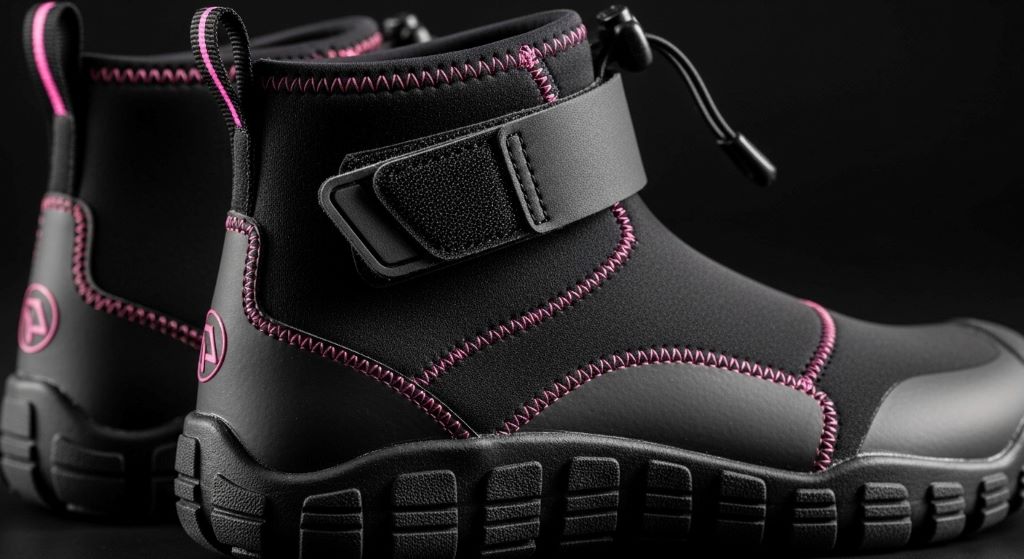
Velcro straps offer adjustability and reliability. You can fine-tune the tightness around your ankle and these closures rarely fail. They do require occasional maintenance, as sand and salt can reduce their effectiveness over time.
Pull-on designs eliminate closures entirely. These booties rely on stretchy neoprene and perfectly sized ankle openings. They provide the best water seal and fewest failure points. However, they can be challenging to put on, especially when the neoprene is cold and stiff.
Some advanced models combine systems. You might find booties with both an internal ankle strap and an external velcro closure, providing maximum security and adjustability.
Matching Booties to Surf Style
Your surfing approach should influence your bootie selection. Different styles place different demands on your footwear.
Longboarders typically benefit from thinner, more flexible booties. Cross-stepping and hanging five require excellent board feel and foot dexterity. Heavy, restrictive booties interfere with these maneuvers. However, you still need adequate warmth and protection for your conditions.
Shortboard surfers can often handle thicker soles and less flexibility. Since shortboarding relies more on body positioning than foot placement, you can prioritize warmth and protection. The reduced board feel matters less when you’re performing aggressive turns.
Beginners should lean toward more protective options. While learning, you’ll spend considerable time standing in shallow water, walking on the beach, and falling. Cold water surf shoes with robust soles prevent injury and let you focus on fundamentals rather than foot pain.
Care and Maintenance Tips
Proper care extends the life of your booties significantly. Salt, sand, and sun all degrade neoprene over time.
Rinse your booties thoroughly with fresh water after every session. Salt crystals act like tiny knives, cutting through neoprene fibers as the material flexes. A quick rinse takes minutes but prevents premature deterioration.
Dry them properly by turning them inside out and hanging them in a shaded, well-ventilated area. Direct sunlight breaks down neoprene, causing it to become brittle and crack. Never use heat sources like radiators or dryers.
Store booties flat or hanging, never folded or crumpled. Creases in neoprene become permanent weak points where tears often start. If you must pack them for travel, roll them gently rather than folding.
Inspect seams and soles regularly. Small tears can be repaired with neoprene cement before they become major problems. Catching damage early saves money and extends usability.
Additional Features Worth Considering
Beyond basic construction, several features can enhance your experience with reef protection shoes.
Ankle support becomes crucial for rocky entries and exits. Some booties include reinforced ankle areas or higher cuts that prevent rolling your ankle on uneven surfaces. This feature matters more as you age or if you have previous ankle injuries.
Drainage holes allow water to escape when you’re out of the water. While this doesn’t affect in-water performance, it makes walking on the beach more comfortable by preventing your booties from becoming heavy, water-logged boots.
Reflective elements improve safety during dawn patrol or sunset sessions. Small reflective strips on the heel or ankle make you more visible to watercraft.
Anti-microbial treatments reduce odor buildup. Neoprene can develop unpleasant smells over time, especially if not properly dried. Some manufacturers include treatments that inhibit bacterial growth.
Budget Considerations and Value
Surf booties range from budget-friendly options under fifty dollars to premium models exceeding one hundred and fifty dollars. Understanding where your money goes helps you make informed decisions.
Entry-level booties work fine for occasional cold water sessions. If you only surf in booties a few times per year, spending heavily makes little sense. However, expect these to last one or two seasons at most.
Mid-range options offer the best value for regular cold water surfers. These typically include quality materials, solid construction, and reasonable durability. You’ll likely get two to three seasons of regular use.
Premium booties justify their cost through superior materials, innovative features, and extended longevity. Serious cold water surfers who use booties year-round find these worth the investment. The improved comfort and warmth during long sessions add up over time.
Remember that buying cheap booties repeatedly costs more than purchasing quality ones initially. Calculate cost per session rather than focusing solely on upfront price.
When to Replace Your Booties
Even quality booties eventually wear out. Knowing when to replace them prevents discomfort and potential injury.
Visible tears or holes obviously require replacement. However, more subtle signs indicate declining performance. If your feet feel colder than usual despite similar conditions, the neoprene has likely compressed and lost insulating properties.
Sole separation represents a critical failure point. Once the sole begins peeling away from the upper, replacement becomes necessary. Attempting repairs rarely provides lasting solutions.
Loss of ankle seal means water flows freely into your booties. This defeats their primary purpose and makes sessions unnecessarily uncomfortable.
If you notice any of these issues, start shopping for replacements. Having backup booties ensures you won’t miss sessions while waiting for new ones to arrive.
Making Your Final Decision
Choosing the right women’s surf booties involves balancing multiple factors. Start by honestly assessing your primary need. Do you surf primarily in cold water where warmth matters most? Or do you navigate treacherous rocky entries where sole protection takes priority?
Consider your commitment level. Casual cold water surfers can justify less expensive options, while dedicated year-round surfers benefit from premium choices. Think about how often you’ll use them and in what conditions.
Read reviews from other female surfers who face similar conditions. Their experiences provide valuable insights into real-world performance, sizing accuracy, and durability.
Don’t hesitate to try multiple brands and styles. What works perfectly for one surfer may not suit another, even with identical foot measurements. Many surf shops allow returns or exchanges on unworn booties.
Trust your feet during the fitting process. Slight discomfort in the store will magnify significantly during a two-hour session. If something feels off, keep looking.
Conclusion
Selecting the right women’s surf booties transforms cold and rocky beach sessions from endurance tests into enjoyable experiences. By carefully considering water temperature, terrain challenges, material quality, and proper fit, you’ll find footwear that protects your feet while maintaining the board feel necessary for performance surfing. Remember that neoprene surf boots, cold water surf shoes, and reef protection shoes serve different but sometimes overlapping purposes, so prioritize features that match your specific surfing environment. Invest in quality construction, maintain your booties properly, and replace them when performance declines. With the right footwear, you’ll extend your surf season, explore new breaks confidently, and focus entirely on the pure joy of riding waves rather than protecting your feet.
Frequently Asked Questions
Should I size up or down if I’m between sizes?
Most experienced surfers recommend sizing down when between sizes. Booties stretch slightly with use, and a snug initial fit ensures better warmth and reduces water flow. However, if you have wide feet or bunions, sizing up may be necessary for comfort. Always try booties on with your wetsuit to test the real-world fit.
Can I use surf booties for other water sports?
Absolutely. Surf booties work excellently for kayaking, paddle boarding, kitesurfing, and even snorkeling in cold water. Their versatility makes them a worthwhile investment for multi-sport enthusiasts. However, sport-specific footwear may offer advantages for specialized activities.
How do I prevent my booties from smelling bad?
Rinse them thoroughly with fresh water after every use, then turn them inside out and dry them completely in a shaded area with good airflow. Never store damp booties in your wetsuit bag. Consider using wetsuit shampoo periodically and ensure they dry fully between sessions.
Do I need different booties for different seasons?
Many surfers own multiple pairs for varying conditions. Thinner 3mm booties work for shoulder seasons, while thicker 5mm or 7mm options handle deep winter. This approach maximizes comfort across temperature ranges, though it requires additional investment. Casual surfers often choose one mid-range thickness that handles most conditions adequately.
Will booties affect my surfing performance?
Initially, you’ll notice reduced board feel compared to barefoot surfing. However, most surfers adapt within a few sessions. The protection and warmth booties provide typically outweigh any performance impact. Many cold water surfers argue they actually perform better with warm, protected feet than they would while distracted by discomfort.
Related Topics:
Top 10 Tactical Backpacks for Everyday Carry in 2025
How Far Is the ÖTILLÖ Swimrun? Distance, Route, and Challenge Details