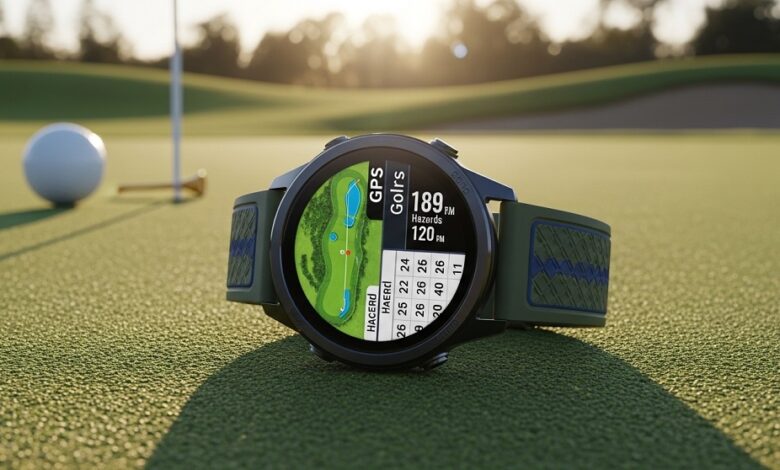
A smartwatch for golf is a wearable device designed to provide real-time course data, shot tracking, distance measurements, and performance insights directly from your wrist. Choosing the right model helps golfers make faster decisions, improve club selection, and manage strategy across every hole.
Many golfers lose strokes not because of swing errors, but because of poor course management. Standing over the ball without knowing the exact distance to hazards or greens leads to hesitation. That hesitation leads to mistakes. Over time, those mistakes affect scoring confidence.
A golf-ready smartwatch solves this problem by turning data into decisions. Instead of guessing yardages, you act with clarity. Instead of relying on memory, you rely on measured insights. According to Arccos Golf performance tracking data analyzing hundreds of millions of shots, distance control and approach accuracy influence scoring more than most amateurs expect. A smartwatch helps address both.
But not every watch supports serious golfers. Some only track steps. Others lack course maps. Others drain battery mid-round. Choosing the right one means selecting features that support real play, not just lifestyle tracking.
This guide explains exactly how to choose a smartwatch that improves your golf performance without overpaying for features you will not use.
What Features Should a Smartwatch for Golf Include?
A golf smartwatch should include GPS yardages, hazard mapping, shot tracking, battery endurance for 18+ holes, and swing analytics support.
These are the core capabilities that separate a golf smartwatch from a general fitness wearable.
1. GPS Distance Accuracy
Accurate yardage to the front, middle, and back of the green is essential. This removes guesswork from club selection. Look for watches with multi-satellite support such as GPS, GLONASS, or Galileo for better reliability.
2. Hazard Awareness
Many amateur golfers underestimate hazard distance. A smartwatch that shows bunkers, water carries, and layup zones helps reduce penalty strokes.
3. Shot Tracking Capability
Automatic shot detection allows performance review after the round. Over time, this reveals patterns such as short approaches or inconsistent tee distances.
4. Course Database Coverage
The best watches include access to 40,000+ golf courses worldwide. If your local course is missing, the watch becomes less useful.
5. Battery Life for Full Rounds
Some smartwatches last only 8 hours with GPS active. Golf models should support at least 18 holes comfortably.
Without these five features, a smartwatch becomes a distraction rather than a performance tool.
How Accurate Is a Smartwatch for Golf Compared to a Rangefinder?
A golf smartwatch provides quick distance estimates across the entire hole, while a rangefinder offers precise pin measurements for individual targets.
Both tools support better decisions. They serve different roles.
A smartwatch helps before you address the ball. It answers:
- How far is the front of the green?
- Where is the bunker located?
- What distance remains after a layup?
A rangefinder answers:
- Exact flag distance
- Slope-adjusted targeting
- Pin positioning precision
Many experienced golfers use both. However, beginners benefit more from smartwatches because they improve overall course awareness instead of only targeting the pin.
Does Shot Tracking Really Help Improve Golf Scores?
Yes. Shot tracking identifies performance weaknesses that are difficult to notice during play.
Most golfers misjudge their real distances. They believe they hit farther than they actually do. A smartwatch corrects that assumption with measurable data.
Performance tracking reveals:
- Average club distances
- Miss direction trends
- Approach consistency gaps
- Short-game frequency issues
Arccos Golf research analyzing over 500 million shots found amateur golfers often lose strokes through approach distance control rather than driving accuracy. Smartwatch shot tracking directly targets this weakness.
Over several rounds, patterns appear. Once patterns appear, strategy improves.
What Battery Life Should a Golf Smartwatch Have?
A reliable smartwatch for golf should support at least 12–20 hours of GPS use or two full rounds without charging.
Battery interruptions during a round reduce confidence. Golf watches operate differently from fitness trackers because GPS remains active continuously.
Look for watches offering:
- Full-round endurance
- Multi-round standby capability
- Quick charging support
- Battery-saving golf mode
If a device cannot complete two rounds comfortably, it is not optimized for golfers.
How Important Is Course Mapping in a Smartwatch for Golf?
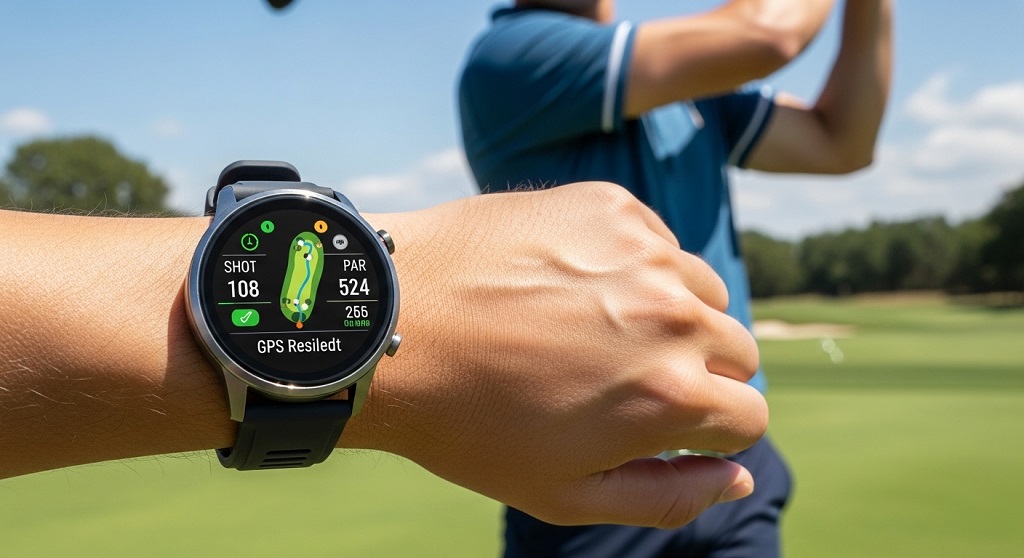
Course mapping allows golfers to visualize hazards, doglegs, landing zones, and green shapes before selecting a club.
This feature improves strategy more than most players expect.
Instead of reacting after mistakes, golfers plan before swinging.
Advanced mapping features include:
- Hole layout previews
- Green contour visualization
- Hazard distance overlays
- Layup planning tools
Strategic planning reduces risky shots. Reduced risk lowers scores.
Should Beginners Choose a Smartwatch for Golf Instead of a Rangefinder?
Yes. Beginners benefit more from course awareness than pin precision.
A rangefinder measures only distance to a single point. A smartwatch explains the entire hole.
Beginners often struggle with:
- Club selection confidence
- Hazard distance estimation
- Approach planning
- course management decisions
A smartwatch addresses each of these challenges simultaneously.
This makes it one of the fastest ways to improve early scoring consistency.
How Much Should You Spend on a Smartwatch for Golf?
Most golfers find the best value between $200 and $500 depending on tracking depth and mapping features.
| Price Range | Expected Features |
|---|---|
| $150–$250 | Basic GPS yardages and course maps |
| $250–$400 | Hazard mapping, shot tracking, performance insights |
| $400–$700 | Advanced analytics, green contours, smartwatch integrations |
Higher price does not always mean better performance improvement. Choose features that match your playing frequency.
Do Smartwatches Help with Club Selection Decisions?
Yes. A smartwatch provides distance context that supports faster and more confident club choices.
Golfers often rely on guesswork when estimating yardages. That guesswork creates hesitation.
A smartwatch replaces guesswork with:
- front/middle/back distances
- wind-adjusted recommendations (some models)
- hazard carry distances
- previous shot tracking comparisons
Confidence improves tempo. Better tempo improves contact.
Can a Smartwatch for Golf Replace a Phone App on the Course?
Yes. A smartwatch provides faster access to course data without interrupting play.
Phone apps require:
- unlocking screens
- checking brightness
- handling glare issues
- removing gloves repeatedly
A wrist display removes friction.
This keeps attention on the game rather than the device.
What Smartwatch Design Factors Matter Most for Golfers?
Comfort, sunlight readability, and durability influence usability more than appearance.
Golf involves repeated wrist movement. Heavy watches affect swing feel.
Look for:
- lightweight construction
- water resistance
- anti-glare display
- simple interface navigation
A watch that feels invisible during swings performs best on the course.
How Do Performance Analytics Improve Long-Term Golf Strategy?
Analytics reveal where strokes are lost so golfers can prioritize practice efficiently.
Most golfers practice randomly. Random practice produces slow improvement.
Performance analytics show:
- distance gaps between clubs
- miss patterns by direction
- approach accuracy trends
- putting consistency changes
Targeted practice produces measurable scoring gains over time.
Conclusion: How Do You Choose the Best Smartwatch for Golf?
The right smartwatch for golf simplifies decisions before every shot. It replaces uncertainty with structure. It turns yardage estimates into confident execution.
Golfers who rely only on instinct often repeat the same scoring mistakes round after round. Data changes that pattern. Course mapping improves strategy. Shot tracking improves awareness. Analytics improve practice direction.
Start by identifying the features that match how often you play. Choose reliable GPS accuracy. Prioritize battery endurance. Add tracking tools if you want performance insights across multiple rounds.
If your goal is lower scores and smarter course decisions, a golf smartwatch is one of the most practical upgrades you can make.
Explore models that match your playing level today and begin tracking the decisions that shape your scorecard tomorrow.
Frequently Asked Questions About Smartwatches for Golf
Is a smartwatch for golf allowed in tournaments?
Yes. Most golf smartwatches are permitted under competition rules if slope measurement features are disabled during tournament play.
Can a golf smartwatch track swing speed?
Some advanced models estimate swing tempo and speed, but dedicated swing sensors provide more precise measurements.
Do golf smartwatches require subscriptions?
Basic GPS distance features usually work without subscriptions. Advanced analytics and green contour mapping sometimes require optional plans.
How many courses come preloaded on golf smartwatches?
Most modern golf smartwatches include access to over 40,000 courses worldwide through built-in or downloadable databases.
Are golf smartwatches waterproof?
Yes. Most models support water resistance suitable for rain play and sweat exposure during rounds.
Can beginners benefit from golf smartwatches?
Yes. Beginners gain immediate value from improved distance awareness and hazard visualization.
Do golf smartwatches work without phones?
Yes. GPS yardage and course mapping features function independently after courses are downloaded.
Read More Also: How Long Sleeve Rash Guards Improve Your Surfing Performance
Discover More: How to Choose Affordable Men’s Cycling Shorts Without Compromising Comfort