
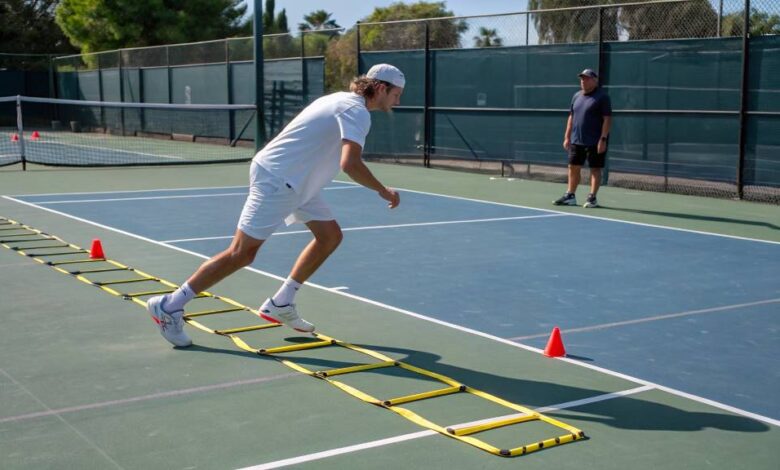
Footwork in tennis is often one of the most overlooked yet crucial aspects of the game. It’s the foundation on which everything else is built. Whether you’re a beginner or a seasoned player, improving your footwork can significantly enhance your speed, agility, and overall performance. With the right techniques and consistent practice, anyone can become more agile on the court. In this article, we’ll dive deep into why footwork matters, how to improve footwork in tennis and what drills and exercises you can incorporate into your routine to step up your game.
What Is Footwork in Tennis?
Footwork refers to how a player moves around the court. This includes everything from the speed and timing of your steps to your positioning and balance. In tennis, efficient footwork allows you to quickly react to your opponent’s shots, maintain control of the rally, and set up for powerful returns. Good footwork can help you reach balls faster, hit with more precision, and minimize the risk of injury.
It’s not just about running and sprinting; it’s about making quick, controlled movements while maintaining balance and readiness for the next shot. Whether you’re hitting a backhand, forehand, or volley, your footwork needs to be sharp and efficient.
Why Footwork is Crucial in Tennis
Footwork is arguably one of the most important aspects of tennis. Here’s why:
- Speed and Agility: The ability to quickly move from one position to another is vital in tennis. Good footwork increases your speed and allows you to cover the court more efficiently, which is crucial when you’re facing fast-paced rallies or aggressive opponents.
- Balance and Stability: Your footwork affects your ability to stay balanced during strokes. If you’re not in a stable position when hitting the ball, your shots may lack power, accuracy, and consistency.
- Energy Conservation: Efficient footwork means fewer wasted steps. Instead of scrambling around the court, you’ll be able to get to the ball more quickly and conserve energy, which is especially important during long matches.
- Injury Prevention: Poor footwork can lead to improper body mechanics, which increases the risk of injury. By improving your footwork, you can protect your joints and muscles from unnecessary stress.
Key Footwork Principles for Tennis

To start improving your footwork, it’s essential to focus on a few key principles:
Proper Stance and Positioning
Your stance is the foundation of your footwork. It helps ensure that you can move in any direction with ease. In tennis, you should always maintain a slightly crouched position, with your knees bent and your body weight on the balls of your feet. This position allows for better balance and quicker reactions.
Short, Quick Steps
Instead of taking long strides, use short, quick steps to move around the court. This will help you adjust more rapidly and stay in a ready position for the next shot. It’s better to take multiple short steps rather than one long step, as this allows you to change direction faster.
Efficient Push-Off
Your ability to push off quickly from one foot plays a significant role in your footwork. The more efficiently you can push off the ground, the quicker you’ll be able to move in any direction. Focus on using the power in your legs to explode towards the ball.
Keep Your Head Up
Always keep your head up and maintain good posture while moving. This will not only help you track the ball better but will also help you stay balanced and in control of your movements. Keeping your eyes focused on the ball, while being aware of the surrounding court, is key to making split-second decisions. Follow these six tips to improve your tennis.
Footwork Drills to Improve Agility in Tennis
Incorporating footwork drills into your training routine can significantly improve your speed and overall court coverage. Here are some effective drills to enhance your agility and movement:
Ladder Drills
Ladder drills are fantastic for improving foot speed and coordination. Place an agility ladder on the ground and use quick foot movements to step through the rungs. This drill helps improve reaction time and builds muscle memory for rapid movement.
Side Shuffle Drill
The side shuffle drill helps with lateral movement, which is crucial for covering the entire court. Set up cones or markers in a straight line and shuffle side-to-side between them as quickly as possible. Focus on keeping your body low and using short, quick steps.
Cone Drills
Cone drills are great for improving your ability to change directions quickly. Place cones in various patterns around the court and practice running to each cone as fast as you can while maintaining good posture and control. This drill helps develop both linear and lateral agility.
Split-Step Practice
The split-step is a critical move in tennis. It’s the moment when you push off both feet just before your opponent hits the ball. Practicing the split-step allows you to react quickly to any shot, whether it’s a forehand, backhand, or lob. Practice jumping and landing on the balls of your feet, ready to explode in any direction.
Shadowing Your Shots
Shadowing is when you practice your movements without a ball. This drill helps improve footwork mechanics and fluidity. Without hitting any balls, mimic the movements required for forehands, backhands, and volleys while focusing on proper foot placement and balance.
Footwork for Specific Tennis Shots
Each shot in tennis requires slightly different footwork. Here’s how to adjust your footwork for each of the most common shots:
Forehand
For the forehand, your goal is to rotate your hips and shoulders while keeping your feet in line with the ball. Your footwork should be quick and responsive, ensuring you’re in a solid position to strike the ball. Make sure to use a closed stance (with your body facing sideways) to help generate power.
Backhand
The backhand requires a slightly more open stance. Whether you’re using a one-handed or two-handed backhand, your body should rotate, and your feet should be set to allow for good balance. The key is getting your non-dominant leg forward to provide stability when hitting the ball.
Volley
For volleys, quick steps and the ability to adjust to the ball are key. You’ll want to stay close to the net and use small, precise steps to adjust your positioning. The idea is to get low and move quickly so you can intercept the ball early.
Serve
Footwork for the serve is about creating the right position and generating power. Start with your feet shoulder-width apart, and use a push-off motion to get your body into the serving position. A good serve requires proper timing and placement of your feet.
How to Build Footwork Strength for Tennis
Building strength in your legs and core is essential for enhancing your footwork. Stronger muscles allow for faster, more powerful movements. Incorporate these exercises into your training routine:
Squats and Lunges
Squats and lunges are great for building leg strength. Both exercises target the quads, hamstrings, and glutes, which are crucial for explosive movement on the court.
Plyometric Exercises
Plyometric exercises, such as jump squats and box jumps, help develop explosive power and agility. These exercises train your fast-twitch muscle fibers, which are responsible for rapid movements.
Core Workouts
A strong core helps with balance and stability during movement. Incorporate exercises like planks, Russian twists, and leg raises into your workout to build core strength.
How to Prevent Footwork Injuries in Tennis
While improving footwork is essential, it’s equally important to avoid injuries. Here are some tips to prevent injuries related to footwork:
Proper Footwear
Wear tennis shoes that provide the right amount of support, cushioning, and traction. Make sure your shoes fit properly to prevent blisters and discomfort. A good pair of tennis shoes will also help you avoid ankle and knee injuries.
Stretching and Warm-ups
Warming up before playing and stretching afterward helps prevent injuries. Dynamic stretching before you play increases your range of motion, while static stretching after playing can help your muscles recover.
Rest and Recovery
Rest is essential to avoid overuse injuries. If you’re feeling fatigued or sore, give your muscles time to recover before heading back on the court. Listening to your body is key to avoiding long-term injuries.
Conclusion
Improving footwork in tennis is a game-changer. It not only boosts your speed, agility, and power but also improves your overall performance on the court. With the right techniques, drills, and consistent practice, you can enhance your footwork and become a more dynamic, efficient player. Remember, it’s about building strength, practicing smart movements, and being proactive about injury prevention. By focusing on your footwork, you’ll notice a significant improvement in your game, allowing you to outmaneuver your opponent and dominate the court.
Frequently Asked Questions
How long does it take to improve footwork in tennis?
Improving footwork can take anywhere from a few weeks to several months, depending on your starting point and commitment to practice. Consistency is key.
What are the best drills for improving tennis footwork?
Ladder drills, side shuffle drills, cone drills, and split-step practices are some of the best for improving footwork. These drills enhance agility and speed.
How does footwork affect my tennis serve?
Good footwork is essential for generating power and stability during the serve. Proper positioning and timing ensure an effective serve and reduce the risk of injury.
Is footwork the most important skill in tennis?
While every aspect of tennis is important, footwork is often considered the most crucial. It impacts all areas of the game, from speed to balance and shot quality.
How can I improve my lateral movement in tennis?
Lateral movement can be improved with side shuffle drills and cone drills. Focus on quick, small steps and maintaining a low, balanced stance.